Saturday, 10 October 2015

TANJUNG RHU BY HO MINFONG


TANJUNG RHU, SINGAPORE


Tanjong Rhu Road begins from the junction of Fort Road and Meyer Road. A convoluted road with a few branches, it ends near the Kallang basin near the Benjamin Sheares Bridge. This road was a marine yard and the centre point of ship building and repairing in Singapore before the shipyard industry moved to Jurong. In the 1980s, the road and its surrounding areas were converted into a residential estate.

History
Tanjong Rhu Road was named after the Casuarina trees that grew along the coast of Kallang and Rochore. Casuarina trees are known as pokok rhu in Malay, Rhu being the Malay name for the Casuarina littoria variety of the tree. Post-war reclamation and construction work along the east coast resulted in the uprooting of the Casuarina trees. It is unknown when the road was named Tanjong Rhu but the word was in use since the 17th century, as it appeared in E.G. de Eredis's 1604 Map of Singapore as Tanjon Ro. Other roads in the area, which connect to Tanjong Rhu Road, are named after Tanjong Rhu as well, such as Tanjong Rhu Place, Tanjong Rhu View and Tanjong Rhu Cross.

The whole of Tanjong Rhu was designated to be a marine yard by Raffles in 1822. The area from Sandy Point at the tip of the spit to Deep Water Point, where Tanjong Katong currently is, was to be developed as a shipbuilding yard. Chinese settlers who dwelled in this area were compensated for their move-out of Tanjong Rhu. One of the pioneers of shipbuilding business was Captain Flint who set up a company in 1822. By the 1860s, many boatyards were established including those owned by George Lyons, Thorneycroft and United Engineers, and Tivendale. With the development of trade, the shipyard industry in Tanjong Rhu expanded, helped further by the congestion at the Singapore River
. All the boatyards there had to be cleared and relocated to Tanjong Rhu. The boatyards' workers soon settled with their families in Tanjong Rhu and formed a village. As small shipbuilders made their debut at Tanjong Rhu, the area became more populated. In the early years, there was a single main road linking the yards to the village. Travelling between the city and East Coast was by ferry that plied between Johnston Pier at Colleyer Quay and Tanjong Rhu as roads linking these two points came up only in the 20th century.

Description
In the 1980s, the yards had to be relocated to Jurong in line with the government's attempt to cleanse the waterways. By this period, massive reclamation projects were undertaken to extend Bedok into Tanah Merah and Changi. A total of seven phases of the East Coast Reclamation project was completed between 1966 and 1985. The Benjamin Sheares Bridge was built in 1981. In 1991, the government announced its plan of converting Tanjong Rhu into a 34 ha residential enclave with recreational facilities. Today, Tanjong Rhu presents itself as an exclusive private residential area boasting the island's most prestigious waterfront condominiums including The Waterside, Tanjong Ria Condo, Water Place, Sanctuary Green, Parkshore and Pebble Bay. Restaurants, recreational facilities and shops have sprung up by the beach as well. A place of historical interest along the road is the Singapore Swimming Club, established in 1893. Opposite the club is the Dunman High School, established in 1956. It moved here from Dunman Road in 1995. Prior to this, the Ee Hoe Hean (Yihexuan) Club, the so-called Millionaires' Club of Singapore used to be situated near the Singapore Swimming Club, within the premises of a house that belonged to the late Tan Lark Sye
, a prominent businessman. It was said that fortunes were exchanged at the club's mahjong tables. The club presumably shut down with the death of Tan Lark Sye.

At the time of writing this, the Kallang-Paya Lebar expressway (KPE) is being built. Scheduled to be completed by 2007, this S$1.8 billion expressway will cross under the East Coast Parkway, Tanjong Rhu Road, Geylang River and Pan Island Expressway and join the Tampines Expressway above the ground. Geylang River will be diverted in two stages with dams being built on either side of a bridge.

Variant names
Chinese name: Sha tsui (Cantonese), meaning "sand pit". Tan-jiong gu (Hokkien), being the Hokkien pronunciation of the word "Tanjong Rhu".

(http://eresources.nlb.gov.sg/infopedia/articles/SIP_625_2004-12-31.html)

ABOUT THE AUTHOR

Ho Minfong is a Chinese-American writer who was born in Myanmar. She received her Bachelor’s degree in Economics from Cornell University, where she began her literary career with Sing to the Dawn, which she submitted to the Council for Interracial Books for Children’s annual short story contest. Her novels focus on the lives of people living in poverty in Southeast Asia and are set against the backdrop of real events, like the Cambodian refugee problem at the fall of the Khmer Rouge regime. 


TANJUNG RHU BY HO MINFONG

“Tanjong Rhu” gives an insight into Chinese norms, values, religious beliefs and family practices as Mr Li, a successful businessman in the shipping sector, recalls the time spent with his mother and the events that took place before her demise.

SYNOPSIS
Tanjong Rhu is a story about the relationship between Mr.T.W. Li , is a rich businessman in the shipping business and his mother, Ah Ma. Mr.Li's office is Shenton Way is a modern as he is. His mother however, is  a traditional with strong religion beliefs and pratices ancestor worship. Ah Ma and Mr. Li have a close relationship. The day after Ah Ma's funeral, Mr. Li recalls the day he brought his mother a pair of binocular.
       Mr. Li's excitement was dashed when his mother didn't use it the way he want to. Mr. Li wants her to have a better vision,but Ah Ma can only see Tanjong Rhu of the past through the binocular. Indirectly, Ah Ma is trying to make Mr.Li remember who he was before he became a serius businessman. Mr.Li cannot remember all the details of his childhood and when he tried to ask Ah Ma, she had already became too sick to talk to him.
      The story ends with Mr.Li trying to fulfill Ah Ma's wish of getting the key to the drawer that keep her important things for the altar. In the process of looking for the key, Mr.Li suddenly could see Tanjong Rhu.


https://www.youtube.com/watch?v=XhTgPAaRAi0&spfreload=5

https://docs.google.com/presentation/d/1-xtk2OirK2qnEd-4Tz0xOHKxYxfGgJnXassy7yXZqJ8/edit?usp=sharing


Wednesday, 7 October 2015

THE CHARGE OF THE LIGHT BRIGADE


Alfred Tennyson (1809-1892) was one of 11 children born to an upper-middle class country vicar. He received a good literary education.
Alfred started writing poetry from a young age and published his first poems while still a student at Cambridge. His poems range from those focused on the legend of King Arthur to those dealing with the loss of a loved one.
In 1850 he became poet laureate. This meant he had to write important poems about events that affected the British nation. He held this post until his death in 1892, making him the country's longest ever serving laureate.

 Subject matter
The Crimean War was fought between Britain and Imperial Russia from 1853-1856. For the first time in history, newspapers carried eye-witness reports as well as detailing not just the triumphs of war but the mistakes and horrors as well.
The most significant moment in the Crimea came during the Battle of Balaclava. An order given to the British army's cavalry division (known as the Light Brigade) was misunderstood and 600 cavalrymen ended charging down a narrow valley straight into the fire of Russian cannons. Over 150 British soldiers were killed, and more than 120 were wounded. At home the news of the disaster was a sensation and a nation that had until then embraced British military exploits abroad began to question the politicians and generals who led them.

 Form and structure
The poem has a strong rhythm. For example "half a league, half a league" two light beats followed by a heavy beat expresses the sound of the horses galloping.
There are six numbered stanzas, as if each stanza is a memorial stone to 100 of the 600 cavalrymen. The length of the stanzas reflect the structure of the story.
The first three stanzas - the Light Brigade is approaching the guns.
There is a strong structure. Three lines (of three six-to-seven syllables) are followed by a shorter line (five syllables: "rode the six hundred"). This pattern suggests the strong formation in which the cavalry charge.
Stanza two – the Light Brigade has engaged the enemy so the longer stanzas describe the struggle. The structure starts to break down. The rhythm of stanza four, for example, is broken by four shorter lines, while stanza five has only two short lines (lines 42 and 48). The desperate attempt to retreat is expressed in the run of six longer lines (43-48).
Stanza six is a short, sharp conclusion written as if they are the lines we should remember the Light Brigade by.

 Language and Imagery
The language of the poem is understandably military: guns, soldiers, cannon, sabres and gunners set the scene. The power of the poem, however, comes from the careful use of imagery and sound effects.

Imagery
The strong central image of the "valley of Death" (lines 3,7 and 16) refers to a well-known poem in the bible - Psalm 23 - about the 'valley of the shadow of death'. By using this Biblical allusion, Tennyson shows how important the event is.

Sound
Tennyson uses a wide variety of techniques to provide the poem with highly effective sound effects. Alliteration, for example, is used to express the sounds of battle. Note the sound of bullets in line 22 ("shot and shell").
The poem has a strong rhythm. For example "half a league, half a league" two light beats followed by a heavy beat expresses the sound of the horses galloping.

 Attitudes, themes and ideas
Tennyson's job as poet laureate was to capture the public mood and, given the poem is still so well-known, he certainly did that. But the feelings in the poem can appear to be ambiguous – in other words, can be seen in two different ways.
How much outrage is there in this poem, though? Part of its success is the way Tennyson recreates the energy of battle – "half a league, half a league". The final stanza does not express any anger at politicians and generals. It does, however, show delight at what they did: "O the wild charge they made!"
Comparison
This poem is also about remembering soldiers who have died in war but it is the opposite both in its tone and its treatment of the theme. Tennyson, living at the time of the events he describes, sets out to build a monument to them in poetry so their "glory" will never "fade". Sheers is living long after the event. There is no glory here. Instead he sets out to create a small hymn so the fallen soldiers will be remembered for their own brave deeds in battle.

This poem is linked by subject matter: a soldier charging in battle. The treatment, however, is different. Tennyson creates a rich impression of the whole action from a kind of widescreen perspective (a brigade charging down a long valley). Hughes is much closer to the action he describes. He focuses on the experience of one man. So instead of exploring the impact of a military action on a nation, Hughes analyses the emotional response of an individual within a nation's war.
     Sample question
    The basic structure of any answer will be the same:
    • The introduction will explain the relevance of the question to what feelings the poem expresses and an overview of the story the poem tells.
    • Paragraph that covers form.
    • Paragraph that covers structure.
    • Paragraph that covers language (sound and verbal imagery).
    • Conclusion: You then conclude on the meaning that emerges from this.
    For each point, you need to provide evidence (a quote or reference) and an explanation.
    Question
    How does the poet present the experience of conflict in The Charge of the Light Brigade?
    Answer
    Points you could make:
    • Tennyson presents the experience of conflict in several different ways.
    • He uses the form of the poem to illustrate both the battlefield he describes (the long, narrow valley) and the memorials he wants built to honour those who took part (six stanzas like memorial stones to the 600).
    • The structure of the story he tells presents the excitement of the battle: the stanzas get longer and the rhymes more frequent after the calm opening stanza.
    • He uses rhythm to recreate the sound of the horses charging and repetition to recreate the sound and visual effects of battle ("cannon" lines 17-20 and "flash'd" lines 27-28 for example).
    • He gives important lines the heavy "-erd" rhyme to emphasise his anger: "Someone had blunder'd".
    • Finally, he builds to a conclusion, in the final stanza, that suggests that the outcome of this experience is positive: the world wonders, but not as in asking a question such as 'why was the blunder made?' but wonders in awe at the bravery of the British.
    • Tennyson shows that from this disaster national heroes have been born.  (http://www.bbc.co.uk/schools/gcsebitesize/english_literature/poetryconflict/chargelightbrigade5.shtml)
    MODEL QUESTIONS AND SUGGESTED ANSWERS
    1. Where is the setting of the poem?
     The battlefield
    2. Which line in the poem tells us that the soldiers obeyed the order without question?
    "theirs not to reason why"
    3. Why do you think the line "Rode the six hundred" is repeated many times in the poems?
    to emphasise that the 600 soldiers sacrificed  their life on that day in the battlefield 
    4. Give one quality that you admire about the soldiers. Give a reason for your response.
    Loyal as they follow orders.
    5. What is the command given to the soldiers?
    to charge forward and fight the enemies
    6. Give an example of a metaphor used in the poem.
    the valley of death 
    7. Which line in the poem tells the reader that the command was a mistakes?
    someone had blundered
    8. What do you think is the outcome of the battle? Support your response with evidence from the poem.
    Many soldiers die. The phrase into the jaw of death shows that many of them will die in the battle.
    9. In stanza 1, who is speaking to the soldiers?
    the leader/captain
    10. In stanza 2, what does the  line, "theirs  but to do and die" tell us about?
    the soldiers are loyal and courageous
    11. What happened to the soldiers in stanza 3?
     they were attacked by the enemies
    12. What emotions does the poem evoke? What do you feel as you read it? Support your response with evidence from the poem.
    Sympathetic. full of sympathy as many soldiers die in the battlefield.
    13. In stanza 2, which phrase in the poem means to go forward over a set distance?
    "Forward the Light Brigade"
    14. What were the soldiers told to do when they rode into the valley of death?
    "Charge for the gun"
    15. Why do you think the soldiers followed the order even is it would cause their death?
    They are loyal
    16. Despite being attacked from all sides, the soldiers continued on. What consequences would the soldiers have to face if they decided to retreat? Provide reason for your answer.
    Death.The soldiers should never go against the leader and always follow  orders
    17. Why do yo think the persona asked whether there was " a man dismayed"?
    some of the soldiers are not courageous and have weak heart/ will/spirit
    18. There are many jobs today that require people to be brave. Give another example of a job that requires bravery. Provide reason for your answer.
    Policeman. They need to fight for justice.
    19. In stanza 2, which word in the poem means 'made a mistake'?
    " blundered"
    20.  What is the theme of the poem?
    courage
    21. What is the Light Brigade?
    a division in the army
    22. Give one example of personification used in the poem?
    "the jaw of death"
    23. What does the Valley of Death symbolises?
       battlefield/a place where battle/ war  takes palace/ a place where army fight enemies/ a place where armies  fight enemies and many of them die
    24. Which word in Stanza 2 means "mistake"?
            blundered
    25. How many soldiers were involved in the war?
           600 soldiers
    26. Suggest two ways to protect your country?
    1. Be patriotic
    2. Cherish these natural wonders/cherish the natural resources/ cherish the history and romance as a sacred heritage for your children and your children's children. 
    3. Be loyal to one's country
    27. How do you feel about war? Provide a reason to support your response.
     I dislike war. Many people die in the war.
    28. How would you show your love to your country. Suggest two ways.
    1. Vote
    2. Fly our national flag
    3. Proud of our national anthem


    FIGHT FOR ENGLISH 1119/2 : POEM  
    THE CHARGE OF THE LIGHT BRIGADE
    1. About which war was "The Charge of the Light Brigade "written?
    The Crimean War
    2.        According to the first stanza of "The Charge of the Light Brigade", how many British forces rode into the battle?
    Six hundred

    3.       In stanza one, what does the phrase “the Valley of Death” refer to?
    The valley where the British soldiers rode/ the battle occurred/battle field/ battle field where the army died

    4.       Why do you think the poet refers the valley as “The Valley of Death”?
    It is because the soldiers knew that they were going to lose in the battle and they would die.

    5.        Why did the soldiers ride to their death?
    They had to obey their commander’s order.

    6.       In stanza 1, what was the light brigade ordered to do?
     They were ordered to move forward on a frontal assault against a well-armed Russian soldiers/ to attack the Russian soldiers

    7.       What kind of weapons did the Light Brigade have?
    Spears, swords and bows

    8.       What weapons did their opponents/enemies have?
    Cannons, rifles

    9.       In stanza 2, what does the word ‘dismayed’ suggest?
    It means to lose your courage/ to be overcome by terror or sadness

    10.    Did the British soldiers feel discouraged? Why?
    No, they did not. It was because they were carrying out their duty and if they were to die, they would die with honour/ They  had to obey the command of their leader.

    11.    In stanza 2, what does the line “Someone had blundered” suggests?
    The commanding officer had made a stupid and clumsy mistake by ordering them to charge the well- prepared Russian soldiers/ the leader had made a mistake in giving order

    12.    Write the meanings of the following lines:
    i.                     Theirs not to reply :
    The soldiers must not talk back to their commanders.
    ii.                    Theirs not to reason why :
    They must follow the orders without asking why.
    iii.                  Theirs but to do and die:
    All they could do was to ride and fight and possibly die in the battle.

    13.    Who won the battle?
    The Russian soldiers
    14.    Give two adjectives to describe the six hundred men?
     Courageous/ brave/ noble/ heroic/ loyal/ patriotic/obedient
    15.     In Stanza 1 the phrase valley of Death means
    Death awaiting/to die/no escape from clutches of death
    16.     In Stanza 1 which word means “to advance”?
    Forward
    17.    In stanza 2 who has made the mistakes that caused the tragedy?
    The leader of the troop/ the commander/ office in-charge
    18.    There are many ways to show our love towards our nation. Suggest two ways.
    i.                     Contribute towards nation building by being a good citizen
    ii.                    Be united and uphold justice in our country.


    19.     If you were in the army and your commander told you to fight in a battle where you would most likely die, what would you do? Why?
    20.    Do you believe that war is sometimes necessary? Why?
    21.    Is it noble to follow orders without asking questions? Why?
    22.    From Stanza 1, what was the command given?
    Forward the light brigade
    23.    From Stanza 2, which line shows the evidence that the soldiers had followed orders?
    Theirs not to make reply/theirs not to reason why/ theirs but to do and die
    24.    From Stanza 2, where do you think the battle take place?
    In the Valley of Death
    25.    Why do you think the soldiers had blindly followed orders? Give your reason.

    A part of training


    Monday, 5 October 2015

    FORM FOUR 2015: A POISON TREE- THE CHARGE OF THE LIGHT BRIGADE

    The Charge of the Light Brigade

    The Charge Of The Light Brigade
    by Alfred, Lord Tennyson
    1809-1892

     
    Alfred, Lord Tennyson
    1809-1892
    This poem was written to memorialize a suicidal charge by light cavalry over open terrain by British forces in the Battle of Balaclava (Ukraine) in the Crimean War (1854-56). 247 men of the 637 in the charge were killed or wounded. Britain entered the war, which was fought by Russia against Turkey, Britain and France, because Russia sought to control the Dardanelles. Russian control of the Dardanelles threatened British sea routes.
    Many in the west best know of this war today because of Florence Nightingale, who trained and led nurses aiding the wounded during the war in a manner innovative for those times. The War was also noteworthy as an early example of the work of modern war correspondents.
    - See more at: http://www.nationalcenter.org/ChargeoftheLightBrigade.html#sthash.yVvkGnbn.dpuf
    I
    Half a league, half a league,
    Half a league onward,
    All in the valley of Death
       Rode the six hundred.
    “Forward, the Light Brigade!
    Charge for the guns!” he said.
    Into the valley of Death
       Rode the six hundred.

    II
    “Forward, the Light Brigade!”
    Was there a man dismayed?
    Not though the soldier knew
       Someone had blundered.
       Theirs not to make reply,
       Theirs not to reason why,
       Theirs but to do and die.
       Into the valley of Death
       Rode the six hundred.

    III
    Cannon to right of them,
    Cannon to left of them,
    Cannon in front of them
       Volleyed and thundered;
    Stormed at with shot and shell,
    Boldly they rode and well,
    Into the jaws of Death,
    Into the mouth of hell
       Rode the six hundred.

    IV
    Flashed all their sabres bare,
    Flashed as they turned in air
    Sabring the gunners there,
    Charging an army, while
       All the world wondered.
    Plunged in the battery-smoke
    Right through the line they broke;
    Cossack and Russian
    Reeled from the sabre stroke
       Shattered and sundered.
    Then they rode back, but not
       Not the six hundred.

    V
    Cannon to right of them,
    Cannon to left of them,
    Cannon behind them
       Volleyed and thundered;
    Stormed at with shot and shell,
    While horse and hero fell.
    They that had fought so well
    Came through the jaws of Death,
    Back from the mouth of hell,
    All that was left of them,
       Left of six hundred.

    VI
    When can their glory fade?
    O the wild charge they made!
       All the world wondered.
    Honour the charge they made!
    Honour the Light Brigade,
       Noble six hundred!

    Summary

         The poem tells the story of a brigade consisting of 600 soldiers who rode on horseback into the “valley of death” for half a league (about one and a half miles). They were obeying a command to charge the enemy forces that had been seizing their guns.
        Not a single soldier was discouraged or distressed by the command to charge forward, even though all the soldiers realized that their commander had made a terrible mistake: “Someone had blundered.” The role of the soldier is to obey and “not to make reply...not to reason why,” so they followed orders and rode into the “valley of death.”
       The 600 soldiers were assaulted by the shots of shells of canons in front and on both sides of them. Still, they rode courageously forward toward their own deaths: “Into the jaws of Death / Into the mouth of hell / Rode the six hundred.”
       The soldiers struck the enemy gunners with their unsheathed swords (“sabres bare”) and charged at the enemy army while the rest of the world looked on in wonder. They rode into the artillery smoke and broke through the enemy line, destroying their Cossack and Russian opponents. Then they rode back from the offensive, but they had lost many men so they were “not the six hundred” any more.
       Canons behind and on both sides of the soldiers now assaulted them with shots and shells. As the brigade rode “back from the mouth of hell,” soldiers and horses collapsed; few remained to make the journey back.
       The world marvelled at the courage of the soldiers; indeed, their glory is undying: the poem states these noble 600 men remain worthy of honor and tribute today.


    FORM FOUR 2015: A POISON TREE- THE LIVING PHOTOGRAPH

    The Living Photograph

    The Living Photograph
    My small grandmother is tall there, 
    Straight back, white, broderie anglaise shirt,
    pleated skirt, flat shoes, grey bun,
    a kind, old smile round her eyes.
    Her big hand holds mine,
    white hand in the black hand.
    Her sharp blue eyes look her own death in the eye.
    It was true, after all, that look.
    My tall grandmother became small.
    Her back round and hunched.
    Her soup forgot to boil.
    She went to the awful place grandmothers go.
    Somewhere unknown, unthinkable
    But there she is still,
    In the photo with me at three,
    The crinkled smile is still living, breathing.
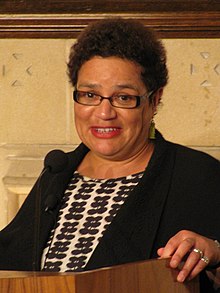
    Jackie Kay
     
    The poet's name is Jackie Kay which was born  November 9 1961 in Edinburgh, Scotland to a Scottish mother and a Nigerian father. Her parents gave her away for adoption to white Scottish parents (John and Helen Kay) who brought her up in Glasgow with great affection. The grandmother in the poem above was her adoptive grandmother who also loved her as much as her biological parents. Thus, from an early age, Jackie Kay was often baffled by her ethnic identity as she looked "coloured" compared to her adoptive "white" grandmother and adoptive parents. This poem, like many other by Jackie Kay, reflects her generally happy, childhood, as well as her concerns about her true 'biracial' ethnic identity.


    About the poem
    The persona captured two images of her adoptive grandmother -one seen in the photograph when the persona was three years old and another image of her grandmother as the lady became older and finally passed away. The persona resonates with the memories of many young people who have lost their beloved grandparents. 
    Theme
    1. Appreciation and affection for a grandparent
    2. Search for the persona's identity
    3. The mystery of ageing and death
    4. Filial piety ( Virtue respect for one's ancestor )
    Moral Value
    1. Filial piety
    2. Inter-racial harmony
    Tone/Mood of Poem
    The poet used childlike voice but with confident and optimistic despite her reference to the grandmother's death.
    Persona or Speaker

    The persona in the poem is a child who grows from the age of three in the photograph to a more mature age.

    https://www.youtube.com/watch?v=G7Kx6Rjkm9k


    Exercise 1
    Complete the poem.  Try not to refer to the text.  

    The Living Photograph
    My small grandmother is tall there,
    straight-back, white broderie anglaise (1)___________________,
    pleated (2)____________, flat shoes, grey bun,
    a kind, old (3)_________ round her eyes.
    Her big hand (4)____________mine,
    white hand in black hand.
    Her sharp blue eyes look her own (5) ______________ in the eye.
                It was (6) __________ after all; that look.
                My tall grandmother became small.
                Her back round and (7) _____________.
                Her (8) _____________ forgot to boil.
                She went to the (9) ____________ place grandmothers go.
                Somewhere unknown, (10) ___________.
    But there she is still,
    in the photo with me at (11)____________,
    the crinkled smile is still (12) _____________ , breathing.


    Exercise 2
    Complete the bridge map with the antonyms to the words given.
    1.   true                Antonym: ______________
    2.   sharp             Antonym: ____________ 
    3.  forgot             Antonym: ______________
    4.   awful             Antonym: ______________


    Exercise 3
    Read the following statements and state whether they are “True” or “False”.
    1.       The persona recollects the memories of her grandmother as she looks at the photograph.
    (___________)          
    2.      The persona’s grandmother is still living with her.
    (___________)
    3.      The grandmother seems to be a friendly and kind woman.
    (___________)
    4.      The persona is three years old when her grandmother dies.
    (___________)
    5.      The grandmother remains strong and healthy until her death.
    (___________)
    6.      In the photograph, the grandmother will always be alive.
    (___________)

    Exercise 4
    Answer the following questions based on your understanding of the poem.
    1.       How old was the persona when the photograph was taken?

    2.      Which line in the poem tells us the grandmother has become forgetful?

    3.      The grandmother seems to be a friendly and kind woman.

    4.      The persona is three years old when her grandmother dies.

    5.      The grandmother remains strong and healthy until her death.

    6.       Give one moral value one can learn from the poem.


    Exercise 5
    Answer all the questions.
    1.      List down 3 themes of the poem?

    2.      Give 4 moral values that are found in the poem.

    3.      How do you think of the persona feels towards her grandmother?  Support your answer with evidence from the poem.

    4.      “A picture speaks a thousand words” is a common proverb.  How would you relate this to the poem “The Living Photograph”?

    Exercise 6
    Read the questions carefully and answer all the questions.
    1.      Sometimes an elderly member of the family is sent to a nursing home.  Do you agree with this practice?  Provide your reason.

    2.       If you were to take care of your grandmother for a day, what would you do to make her experience an unforgettable one?

    Answers
    Exercise 1

    1.      Shirt          
    2.      Skirt            
    3.      Smile 
    4.      Holds       
    5.      Death   
    6.      True          
    7.      Hunched   
    8.      Soup
    9.      Awful       
    10.  Unthinkable    
    11.  Three       
    12.  Living

    Exercise 2
    1.      false   
    2.      dull       
    3.      remembered    
    4.      Beautiful
    Exercise 3
    1.      True
    2.      False
    3.      True
    4.      False
    5.      False
    6.      True    
    Exercise 4
    1.       She was three years old
    2.      The line, “her soup forgot to boil”
    3.      The word “unthinkable”
    4.      In the first stanza, the grandmother is strong and healthy in the photograph while in the second stanza the grandmother is older and ill.
    5.      The poem is about how a photograph immortalises a person.  This is illustrated in the poem where in real life, the grandmother is dead but with the photograph, she will always be remembered by the persona.
    6.      The poem teaches us that we must spend time with our loved ones because when they pass away, all that will be left are the memories of the time spent together.
    Exercise 5 & 6
    -Accept all correct and acceptable answers-


    The Living Photograph by Jackie Kay
    1.      List two items ‘grandmother’ wears in the photo.
    a)     
    b)     

    2.      What do you think the writer is referring to in the phrase ‘the awful place grandmothers go?


    3.      Why do you think the writer’s ‘small grandmother’ is ‘tall’ in the photo?


    4.      In the first stanza, what does the word there refer to?


    5.          Which line tells you that the writer and her grandmother come from different ethnic background?


    6.      How old was the writer when the photo was taken?

    7.     Why do you think the writer says that her grandmother is tall in the photo but later became ‘small’

    8. Quote evidence from line 14 to line 16 that the photograph was taken a long time ago.

    9.      Explain the meaning of the word ‘crinkled’.


    10.  How do these lines make you feel about photographs of people you love?


    Answers
    1.      a) pleated skirt
    b) flat shoes/white broderie anglaise shirt 
    2.  The writer is referring to death.
    3.         I think it is probably because the photo was taken when the writer’s grandmother was younger.  Her back was not rounded and hunched then, so she looked tall.
    4.         It refers to the photograph.
    5.         ‘white hand in black hand’
    6.         She was three years old.
    7.         I think she says that because at the time the photo was taken her grandmother was younger. Her back was straight therefore she seemed taller. It could also be because the writer was very young at the time (only 3 years old).  As her grandmother grew older, her back became ‘round and hunched’. So she appeared ‘small’. The writer would also have grown bigger and taller too, therefore her grandmother no longer appears tall to her.
    8.         The persona says that the photograph was taken when he/she was three years old.
    9.         Wrinkled
    10.       (accept all logical answers)

     www.ppdkp.net/.../downloads/the_living_photograph.docx


    The Living Photograph by Jackie Kay My small grandmother is tall there, straight-back, white broderie anglaise shirt, pleated skirt, flat shoes, grey bun, a kind, old smile round her eyes. Her big hand holds mine, white hand in black hand. Her sharp blue eyes look her own death in the eye. It was true after all, that look. My tall grandmother became small. Her back round and hunched. Her soup forgot to boil. She went to the awful place grandmothers go. Somewhere unknown, unthinkable. But there she is still, in the photo with me at three, the crinkled smile is still living, breathing.

    Copy the BEST Traders and Make Money : http://bit.ly/fxzulu